

Direct Market Growing Faster than Book Channel; Insights from ComicsPRO Sneak Peek
Sales of comics and graphic novels in North America have reached a new high, and sales in comic shops are growing faster than in the book channel. ICv2 CEO Milton Griepp laid out the numbers in his presentation of the ICv2 White Paper “Navigating the New World of Comics” at the ComicsPRO Sneak Peek, a virtual event held before the in-person conference.
ICv2 estimates that sales of comics and graphic novels in the U.S. and Canada totaled $2.2 billion in 2025, outstripping the highs of the COVID era. Direct market sales were up nearly 30%, growing faster than sales in the book channel, reversing a 15-year trend and bringing total sales in comic shops close to $1 billion. In his White Paper, Griepp discussed some of the reasons for the surge and offered some advice to keep it going.
Comics Stores Gain Ground
In the direct market, sales of comics were up 30% year over year in 2025 while graphic novel sales were up 28%. “The comic store channel was just kind of perking along until we hit COVID,” Griepp said. “Then it took a jump, and the last couple of years, it’s grown almost as rapidly as it was growing during COVID.”
Starting in the 2000s and continuing into the teens, graphic novel sales in the book channel grew faster than in comic shops, overtaking the direct market in 2019 (see “Comic Stores Will Be #2 Channel in 2019”), but in 2025 that gap narrowed considerably. “There’s about a 15-year trend of faster growth in the book channel, and that has been reversed the last couple of years,” Griepp noted.
Comics Growing Faster than Graphic Novels
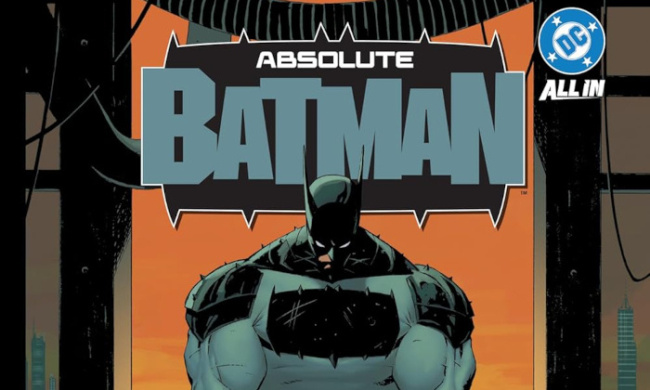
In terms of formats, graphic novel sales are still over 2.5 times comic sales, but comics are growing faster. “[Comic sales] started picking up during COVID and took a big jump in the last couple of years,” Griepp said. In 2025 DC’s Absolute Batman was the top selling comic series, with the other Batman comics drafting behind it, and DC had the top market share in Q4 2025 (see “DC Had #1 Comic Store Market Share in Q4 2025”). “The Absolute pocket universe is blowing up and driving sales,” Griepp said, “and the fact that the comics have remained in print over a long period of time allows them to continue to sell in this format, even though the graphic novels are also killing it.”
Top Titles Attract New Customers; Presenting More Opportunities
“What I’ve been told is that Absolute Batman is bringing in a new cohort of teen and young adult readers and that old readers are being reactivated,” Griepp said.
Griepp also pointed to the Marvel Ultimate universe, the Energon universe, Invincible, and manga as drivers of traffic, but the story doesn’t end there. “What retailers tell me is that new readers are slowly diversifying their purchases away from whatever brought them into the store, whether it was Absolute Batman or Invincible or the Energon books or Marvel Ultimate,” he said.
There’s more room for growth, however. “I think the manga surge in the 2000s and the Telgemeier surge brought in a lot of new female readers, but they don’t seem to be participating to the same degree as male readers in the Absolute Batman surge in comic stores,” Griepp said. “I had a retailer talk to me about how when Saga stopped coming out regularly. They had developed a reader base of female readers that were coming in regularly to buy that, and there’s no hit appealing to female readers on that scale in the comic book format.”
In response to a question, Griepp noted that there are more female customers going to comic stores than at any point in the past, a very positive trend, but that retailers have indicated that the Absolute Batman surge specifically is male-skewing.
He also added this comment after the event: “I didn’t mean to minimize the huge progress that’s been made over the past two decades in making comic stores friendlier to a broader audience, or the progress in broadening the demographic appeal of the comics and graphic novels that are published. I was speaking specifically about the periodical format and noting that publishers need to make more progress in searching for a blow-out periodical hit that appeals to female readers on the same scale as Saga did in its heyday. Any sale is a good sale, but periodical customers tend to visit stores more frequently than graphic novel customers; a female-skewing periodical hit would provide new opportunities.”
Navigating the Road Ahead
There are uniform expectations of another good year in comic shops, and Griepp pointed to three key issues in navigating that path. DC needs to maximize the opportunity of the Absolute titles by keeping the collections in print; retailers need to maximize new reader engagement by encouraging them to broaden their buys; and looking beyond the Absolute frenzy to other trends that can be exploited.
Where Do Hits Come From?
Griepp also spent some time talking about the pipeline for new hits, and how that’s changed. The collapse of Diamond raised new challenges for the smallest publishers, he noted. “The big and medium-sized publishers have, for the most part, reset their distribution to be able to reach stores, but the smallest publishers are having the most trouble with that,” he said. “They’re also going to be the most damaged by not getting paid or by having their inventory seized.”
Retailer Survey on 2026
ICv2’s January 2026 survey asked retailers which categories they expected to grow the most, and which categories they expected to shrink the most in the new year. In order, retailers expected the most growth in manga, adult graphic novels, superhero comics, and non-superhero comics. They also named superhero comics as the most likely to shrink. “This is what retailers face every year,” Griepp said. “How do I base my expectations on the past year? Can I match those huge sales I had last year? So comics retailers are nervous, and that’s because you buy non-returnable.”
The category that retailers named as the second-most likely to shrink was licensed merch, which could be because of the loss of the Diamond Select line.
The Big Trends
Griepp noted five overarching trends affecting geek culture that he’d introduced in a recent column (see “Five Huge Trends”), most importantly the flourishing of independent retail, not just in comic and game stores, but also in independent bookstores, which are growing rapidly.
“People want to connect with other people in a place that’s safe and doesn’t talk about politics or other things that are disturbing their vibe,” Griepp said of the growth in independent retail. “They want to find friends that are interested in the same things they’re interested in. And for comic stores, that’s always been the key. I think it’s more important now than ever, and everything you can do to expand your community will benefit your store.”
For the full, in-depth version of this article with the presentation deck and audio, click here!
Source: ICv2

